If you’re wondering how to make a resume stand out, then simply highlight measurable achievements and tailor your resume to the job description. Use relevant keywords, templates, layouts, and focus on skills and experience that match the given role.
With the development of Applicant Tracking Systems (ATS), making your resume stand out has become quite a challenge. Therefore, this article covers 10 expert tips on how to make resume stand out in a competitive market.
To make a resume stand out, it is essential to optimize it to parse through ATS, which can be done by making your resume presentable with the right template, layout, and design.
Customizing it as per the job description, creating a compelling professional summary and objective, backing your skills with certificates, and following the basic structure of an ATS-friendly resume can help you stand out from other candidates.
Follow these tips if you’re wondering how to make a resume stand out:
1. Make it Presentable with the Right Template
With the ever-increasing development and reliance on Applicant Tracking Systems (ATS), it has now become crucial to design a resume that easily parses this system.
The chronological resume is the most common recommended resume layout, which is easy for both the recruiter and ATS to read. It lists your work experience and education in reverse chronological order, starting with the latest job and moving backward. It includes:
Using common headings, such as “Work Experience”, “Education”, and “Skills”.
High ATS compatibility due to simple format.
Clean organisation of career growth and professional journey, which is easier to scan.
Alternatively, a combination of chronological resume and functional resume is ideal for individuals who want to highlight their skill sets or career transitions. It shows:
Skills at the top and detailed work history in reverse chronological order.
Highlights projects, certifications, and internships.
Ideal for professionals with diverse experience in various fields or individuals with employment gaps.
Presents highly transferable skills.
Expert Tip for Creative Professionals:
Individuals working in creative fields, such as content writing, copywriting, graphic design, marketing, photography, and more, must create a portfolio showcasing their best work samples.
It makes your resume more impressive and provides direct evidence of your skills and creativity.
Include elements like:
Best Work Samples: Articles, Designs, Campaigns, etc.
Client Testimonials, Achievements, and Quantifiable Outcomes.
Brief Introduction about Skills and Professional Background.
Clear Contact Information: LinkedIn, Contact Number, and Email Address.
2. Using a Clean and Professional Layout
Create a layout that looks clean, organised, and consistent. Here are some things you must keep in mind:
Font
Times New Roman, Calibri, or Arial
Font Size
12 to 14
Design
Clean and Minimal
Spacing
1.0 to 1.15 for Body Text
Margins
1 Inch
Format
.docx or PDF (as requested by the employer)
Layout
Reverse Chronological Order
Colour
Professional Colours, such as Black, White, Green, or Blue
3. Keyword Usage
Keyword optimization is crucial for your resume to parse through ATS. An ATS scans resumes and pools the ones with the relevant keyword usage. Hence, avoid keyword stuffing, and use these tips instead:
Identify the words used repeatedly in a job description, along with googling the words that are most relevant for your industry, and make a list.
Avoid stuffing these words; instead, use them naturally. Ideally, 2 to 3 times across different sections is sufficient.
To test your resume, use a free ATS to identify the mistakes.
Expert Recommendation:
To sound more professional, use action verbs, such as:
Spearheaded
Collaborated
Implemented
Improved
Developed
Coordinated
Achieved
Strictly avoid words like: involved in, participated in, did, worked on, responsible for.
Example: Instead of writing: “Worked on managing the social media”
Write: “Managed social media and improved engagement by 30%.”
4. Present the Skills Strategically
For creating a resume that stands out, it is important to present your skill sets strategically. Simply listing down a mix of soft and hard skills, like communication, data analytics, problem-solving, etc, will not make your resume pop; instead:
Create a separate heading for both soft and hard skills, and then list down your skills under each heading.
Do NOT forget to add the skills mentioned in the job description.
Only mention the skills you master and can confidently demonstrate if asked.
Keep the list short. Avoid adding unnecessary skills.
Lesser-Known Tips for Skills Section of a Resume:
Follow these tips to make the skills section stand out:
Place the hard skills at the top and then mention soft skills. 8 to 12 skills must be sufficient.
Do not make vague claims. Back your skill set with proof, such as a certification, work experience, or achievement.
Avoid rating your skills. For example, Communication: 4.5/5. It is not ATS-friendly and does not highlight your proficiency.
5. Customize Every Resume As Per Job Description
If you’re wondering how to make resume stand out and are not tailoring it according to different job descriptions, then you’re doing it wrong. For example, if you’re applying for a data analyst role, then your resume should mention analytical and technical skills related to data analysis, rather than vague skills, such as blog writing, which nowhere resonates with data analysis.
Keep the following points in mind:
Remove unnecessary or irrelevant information.
Use only industry-specific skills and match them with the job description.
Prioritize highlighting achievements and qualifications related to the particular role.
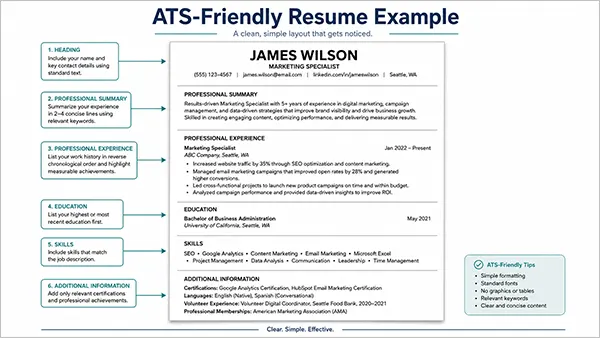
6. Follow the Basic Structure of an ATS-Friendly Resume
An Applicant Tracking System (ATS) may not be able to recognise images and reject the resume with complex designs and formatting. Hence, follow this basic structure to create an ATS-friendly resume:
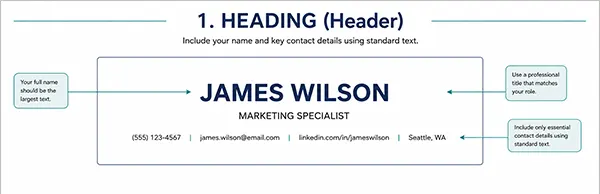
Header:
The header is the first section of your resume, and it should include relevant information about:
Full Name
Your Contact Information (Email Address and Phone Number)
City and State (Optional)
LinkedIn Profile Link
Summary:
Give a brief introduction, covering your career goals, experience, and skills. Customise it as per the job description. It should be:
Only 4-5 lines long.
Clearly highlight your goals, working experience, and skills.
Pro Tip for Writing Summary:
Avoid a summary like: “I am Michael. I’m from New York. I’ve worked with the XYZ organisation”.
Instead, begin directly with relevant experience and background, like:
“Experienced and driven financial analyst with an impressive background of managing budgets while providing analysis and account support”.
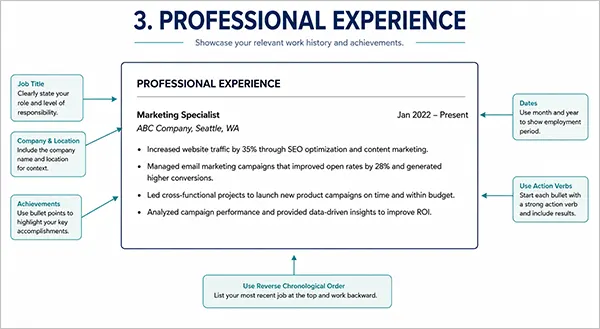
Professional Experience:
Professional experience is listed in reverse chronological order, starting from the latest to the oldest. This heading must include:
Job Title
Organisations Name
Starting and Ending Year
Achievements, Roles, and Responsibilities (Use action verbs, like spearheaded, collaborated, achieved, improved)
Highlight the Quantifiable Impact
Education:
Add your education in reverse chronological order, that is, beginning with the latest and moving backward. This heading must include:
University or College Name
Degree or Qualification Acquired
Starting and Passing Year
CGPA or Percentage (Optional, Add If It’s Impressive)
Technical Skills:
This heading must include all the technical skills that match the job description and are relevant to the role that you’re applying for. List hard skills first and mention soft skills afterwards.
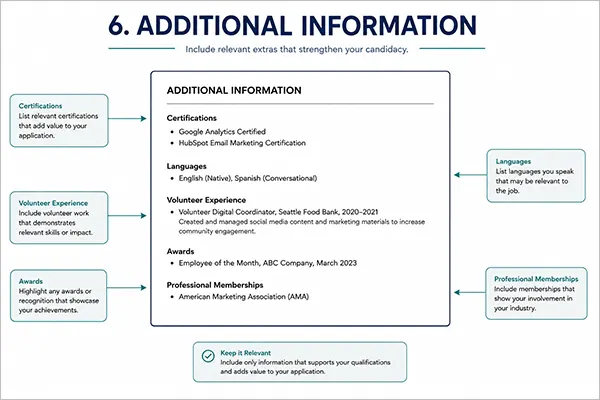
Additional Information:
You can strengthen your resume by showcasing extra information that is relevant to your job application. It can include:
Certifications
Languages
Awards and Recognition
Internships
Volunteer Work
7. Keeping the Resume Concise and Clutter-Free
Do NOT overstuff your resume with irrelevant and outdated details. Keep it concise and to-the-point, allowing recruiters to scan it easily. Keep the following things in mind while creating a concise resume:
A single-page resume is ideal for freshers and experienced professionals.
Create a two-page resume only if you have work experience of more than 10 to 15 years.
Eliminate the information, education, job experience, or skills that are irrelevant and do not match the job description.
Keep the additional information section minimal.
8. Create a Compelling Professional Summary and Objective
As mentioned above in the resume structure, the professional summary is the one that directly begins with your experience, relevant skills, educational background, career goals, and how you can contribute to the company’s goals. This summary and objective should be tailored as per the job description.
Here are the features of a compelling summary and objective:
It should NOT be more than 4-5 lines.
Your educational background, previous work experience, and skills must be presented briefly and concisely.
It should include your career goals and the value that you add to the organisation.
Addressing a Common Misunderstanding:
Many job seekers consider a summary as a heading for a personal introduction and include irrelevant details, such as age, name, or other personal information.
Instead, a professional summary should answer only one question: Why are you a suitable candidate for this role? Hence, it must include only your:
Educational Background
Career Goals
Work Experience
Relevant Skills
An example of a right professional summary is: “Creative and driven content writer with experience in crafting SEO-optimized content across multiple niches…”
9. Quantifying the Achievements and Accomplishments
Statistics and numbers instantly make your resume stand out in a competitive job market. Hence, you must highlight your impact using percentages and numbers. It offers credibility and impresses the recruiter. Here’s how you can quantify the achievements.
Highlight the percentages or figures that showcase the impact of your work.
Mention the number of clients, projects, or team members managed.
Showcase the collaborations and their impact in numbers.
How to Showcase the Measurable Impact:
For example: if you’re working in social media management, you can showcase how your brand campaigns increased conversion or traffic; you can write:
“Managed social media accounts across the company’s LinkedIn, Instagram, and Facebook, increasing followers from 5,000 to 9,200 with targeted campaigns and brand awareness.”
10. Include Certifications, Optimize, and Proofread Your Resume
Lastly, add awards, recognitions, and certifications that are relevant to the job title. It helps your resume stand out, especially if you’re a fresher. Optimize it for ATS by using the right layout, template, and presentation. Proofread and test your resume with the help of a free ATS system, such as Jobscan or MyPerfectResume.
Here are a few tips to keep in mind while finalising your resume:
Check grammatical errors, punctuation, and spelling.
Keep the formatting consistent.
Include additional information, such as internships, volunteer work, course certifications, awards, and recognitions (only relevant ones).
Avoid pictures, graphs, and multiple colours.
Save it in the .docx format or as requested by the employer.
Check whether the contact details, email ID, and LinkedIn provided are correct.
Being honest about the gap in your resume. You can:
Mention any upskilling program, certification course, or training you completed.
Highlight independent projects or volunteer work.
Keep the explanation concise and positive while redirecting the conversation towards your enthusiasm for the new role.
Do NOT overly apologise for the gap in your resume. It is natural, and you can easily tackle the question by presenting it as a duration for growth and learning.
Wrapping Up!
To sum up, creating a resume is fairly easy, but impressing the recruiter with it takes a long, tiring journey. People often ask how to make a resume stand out; the simple answer is to present your skills, achievements, and experience clearly and professionally.
Using relevant keywords, quantifying the achievements, and keeping the design simple and professional capture a recruiter’s attention quickly. It significantly increases your chances of getting an interview call and moving closer to your career goals.
Frequently Asked Questions (FAQs)
How to make your resume stand out?
To make a resume stand out, it is essential to make it presentable with the right template, layout, and design. Customizing it as per the job description, creating a compelling professional summary and objective, backing your skills with certificates, and following the basic structure of an ATS-friendly resume can help you stand out from other candidates.
What is the 30-second rule for a resume?
The 30-second rule implies that a recruiter only spends 30-seconds to scan your resume, which means it should impress the recruiter within these 30 seconds. Sometimes, this rule is also a 7-second rule.
What are red flags on resumes?
Grammatical errors, spelling mistakes, inconsistent formatting and presentation, no quantifiable results, and excessive employment gaps can be red flags on a resume.
Can ChatGPT create an ATS-friendly resume?
Yes, ChatGPT can help you create a draft of an ATS-friendly resume. However, it is advised to prepare a resume on your own to avoid any discrepancies.